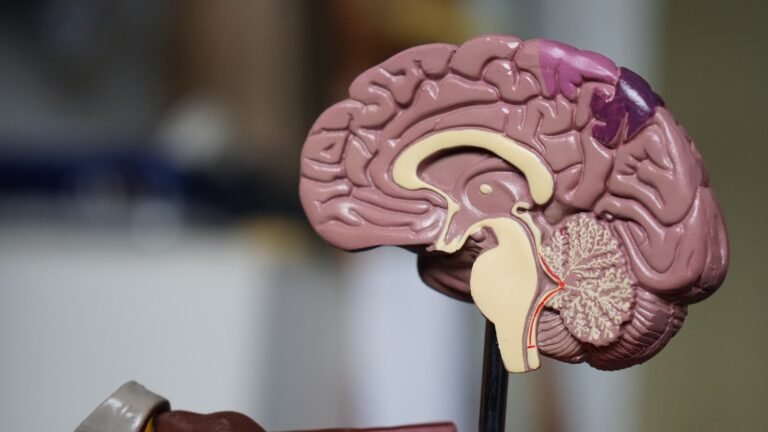
One operation in 1953 cured a young man’s seizures — and accidentally trapped him in an eternal present, unable to make a single new memory ever again.
His name was Henry Molaison, though for most of his life the world knew him only as H.M., to protect his privacy. As a young man he suffered from seizures so severe he could barely function. In 1953, a surgeon tried a bold fix: remove the small, seahorse-shaped structures deep in his brain that seemed to be the source.
The seizures got better. But something no one expected happened too. From that day on, Henry could not form new long-term memories. He could hold a thought for maybe 30 seconds — then it was gone, like writing on water.

The twist that changed everything
Here’s where it gets fascinating. Scientists, led by Brenda Milner, gave Henry a tricky task: trace a star while looking only at his hand in a mirror. It’s frustrating at first — your hand goes the wrong way. Most people get better with practice over days.
So did Henry. Day after day his tracing improved — his skill clearly stuck. But every single time, he swore he’d never done it before. His hands remembered what his mind could not.
Henry could learn new skills without ever remembering learning them — proof that the brain files “how” and “what” in completely different drawers.
That split is the discovery. Memory isn’t a single filing cabinet. There are at least two big systems:
| What Henry lost | What Henry kept |
|---|---|
| Declarative memory — facts & events (“what”) | Procedural memory — skills & habits (“how”) |
| Remembering a new person, a meal, today’s date | Getting better at mirror-drawing, motor skills |
Why H.M. still matters
- He proved the hippocampus is essential for forming new memories — but not for storing old ones.
- He showed that “knowing that” and “knowing how” are separate systems in the brain.
- He became, in a sense, the founder of modern memory science — participating in decades of studies he could never recall.
Henry Molaison died in 2008. He spent his life kind, patient and endlessly cooperative with researchers he met, in his mind, for the very first time — again and again. His brain was later sliced into 2,401 thin sections and preserved for study. Even now, he’s still teaching us.
References
- Scoville WB, Milner B. Loss of recent memory after bilateral hippocampal lesions. Journal of Neurology, Neurosurgery & Psychiatry. 1957;20(1):11–21.
- Corkin S. What’s new with the amnesic patient H.M.? Nature Reviews Neuroscience. 2002;3(2):153–160.
- Corkin S. Permanent Present Tense: The Unforgettable Life of the Amnesic Patient, H. M. Basic Books; 2013.
- Squire LR. The legacy of patient H.M. for neuroscience. Neuron. 2009;61(1):6–9.
Every article is written in clear, jargon-free language and based on evidence from peer-reviewed research and established neuroscience references. We draw from review papers, textbooks, and leading scientific journals to explain complex topics accurately and accessibly. When important scientific evidence changes our understanding of a topic, we revise our content to reflect it.