You wake from a dream so vivid you could swear you would remember it forever — a whole world, a story, faces and places. Reach for it thirty seconds later and it is gone, like smoke through your fingers. Why do dreams, so real in the moment, vanish the instant we wake?
It is not that dreams are meaningless or too strange to keep. The problem is more basic: the sleeping brain is simply in a poor state for forming lasting memories.
Built to forget
There may even be an advantage to it. If we saved every dream as vividly as real events, our memories could become cluttered with things that never happened. A brain that lets most dreams fade keeps the record of our actual lives clearer — forgetting, once again, doing useful work.
How to remember more of your dreams
The trick is to catch them before they fade. Keep still on waking and replay the dream in your mind, or write it down immediately — even a keyword or two. People who keep a dream journal reliably recall more, simply because they grab the memory while it is still there.
Dreams do not fade because they are trivial — but because the sleeping brain barely saves them.
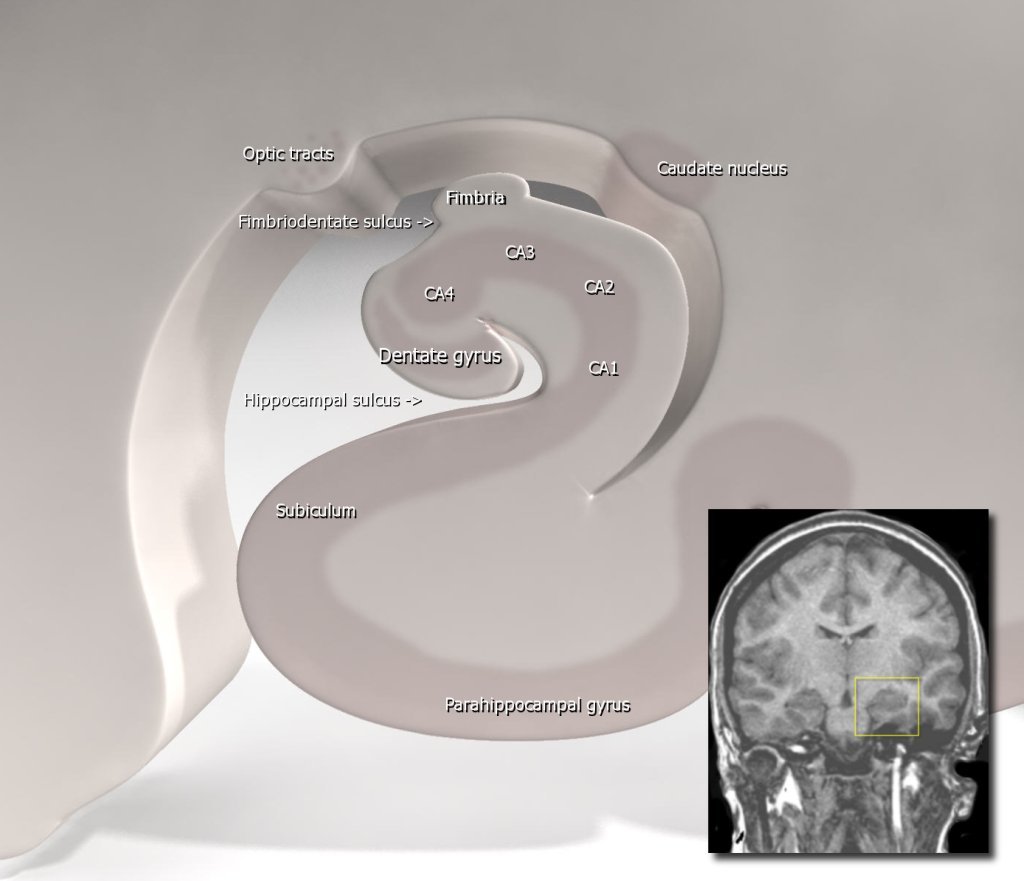
It connects to how memory is built and lost, seen dramatically in H.M., and to other quirks of the remembering mind like déjà vu. For more, this overview of dreams is a good next step.
- Most dreams are forgotten within minutes of waking.
- The brain chemistry needed to save memories is low during REM sleep.
- Recalling or writing a dream immediately helps you keep it.
So if your dreams dissolve before breakfast, nothing is wrong — your brain is doing exactly what it does every night. And if you would like to keep more of them, the secret is simply speed: reach for the dream the moment you wake, before the sleeping brain’s natural forgetting sweeps it away.
Images: “A Child’s Dream of a Star” via Internet Archive Book Images (no known restrictions) and hippocampus image by Frank Gaillard / Radiopaedia (CC BY-SA 3.0), via Wikimedia Commons.
References
- Vallat R, Ruby PM. Dream recall frequency: individual differences and neural correlates. Frontiers in Psychology. 2019;10:1958.
- Hobson JA. REM sleep and dreaming: towards a theory of protoconsciousness. Nature Reviews Neuroscience. 2009;10(11):803–813.
Every article is written in clear, jargon-free language and based on evidence from peer-reviewed research and established neuroscience references. We draw from review papers, textbooks, and leading scientific journals to explain complex topics accurately and accessibly. When important scientific evidence changes our understanding of a topic, we revise our content to reflect it.