
A stranger stops you to ask for directions. Mid-sentence, two workers rudely carry a door between you — and in that instant, the person you were talking to is swapped for someone else. Different height, different clothes, different voice. Astonishingly, about half of people carry on as if nothing happened. This is change blindness.
It feels impossible. Surely you would notice the person in front of you becoming someone else? Yet again and again, when the change is masked by a disruption, people simply do not.
The world you think you see
Our sense of a detailed, stable scene is largely an illusion of good design. The brain stores just enough to act, and trusts the world to stay put. Usually it does. But experiments like the door study exploit that trust to show how little we are really holding at any moment.
Why it matters
Change blindness has real consequences: it helps explain why eyewitnesses miss things, why drivers overlook hazards, and why continuity errors in films slip past us. Like its cousin the invisible gorilla, it is a humbling reminder that seeing and noticing are not the same.
The person in front of you changed — and half of us would keep right on talking.
It is a close relative of the invisible gorilla, from the same line of research on attention, and of the brain’s quiet editing in the McGurk effect. For more, this overview of change blindness is a good next step.
- People often fail to notice a person being swapped during a brief interruption.
- We store only a rough sketch of a scene, not a full picture.
- Change blindness affects eyewitnesses, drivers and everyday perception.
Change blindness does not mean our eyes are poor — it means our brains are efficient, keeping only what they need. But it is worth remembering how much can slip by unnoticed, especially when we are certain that nothing could.
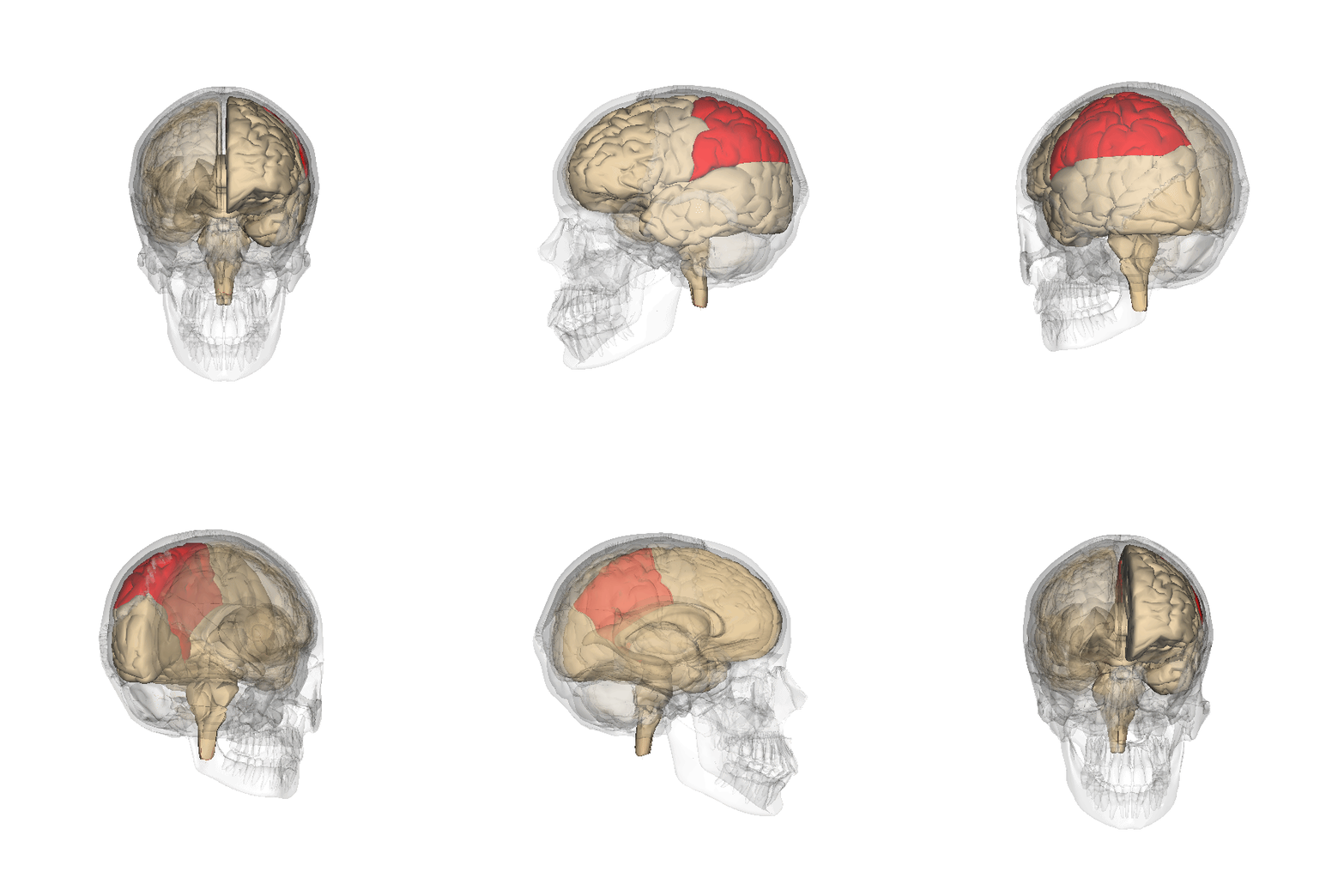
Images: people talking by Virtuegrand (CC BY-SA 4.0) and parietal-lobe diagram by Anatomography (CC BY-SA 2.1 JP), via Wikimedia Commons.
References
- Simons DJ, Levin DT. Failure to detect changes to people during a real-world interaction. Psychonomic Bulletin & Review. 1998;5(4):644–649.
- Rensink RA, O’Regan JK, Clark JJ. To see or not to see: the need for attention to perceive changes in scenes. Psychological Science. 1997;8(5):368–373.
Every article is written in clear, jargon-free language and based on evidence from peer-reviewed research and established neuroscience references. We draw from review papers, textbooks, and leading scientific journals to explain complex topics accurately and accessibly. When important scientific evidence changes our understanding of a topic, we revise our content to reflect it.