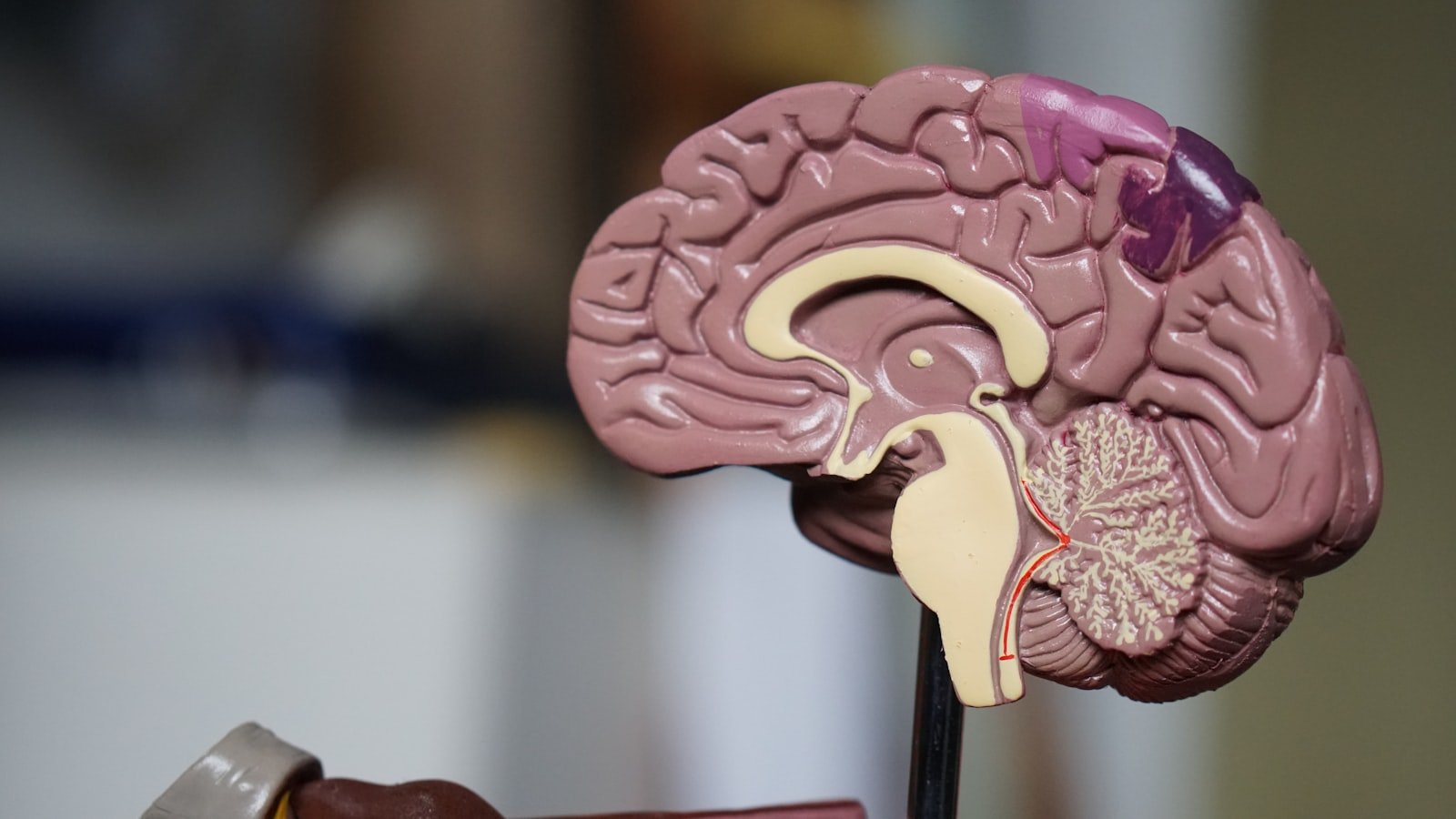
In 1848, a railway foreman took a metre-long iron rod clean through the front of his skull — and lived. What happened to him next quietly rewired how we understand the brain.
Picture this. It’s a warm September afternoon in Vermont. Phineas Gage, a well-liked 25-year-old construction foreman, is packing blasting powder into rock with a metre-long iron tamping rod. Something sparks. The rod — three centimetres thick, over a kilogram — fires upward like a javelin. It enters under his left cheekbone, passes behind his eye, and exits through the top of his skull, landing 25 metres away.
And here’s the part that sounds made up: Gage never lost consciousness. Within minutes he was sitting up and talking. According to the doctor who treated him, he was calmly explaining what had happened while everyone around him tried not to faint.
The part that changed neuroscience
Gage’s body healed. But the people who knew him noticed something stranger than any scar: his personality had shifted. The careful, responsible foreman had become impulsive, unreliable, quick to swear and quick to make terrible decisions. His friends put it bluntly — he was “no longer Gage.”
That single sentence is why he’s in every neuroscience textbook. Before Gage, most people assumed the mind floated somewhere above mere biology. His case dropped a hard clue on the table: damage a specific chunk of tissue, and you can change a specific part of someone’s character. Personality, it turned out, has an address.
Now, the myth-busting part
Here’s what most retellings leave out. Over the decades, Gage got turned into a kind of monster — a violent, ruined man. The evidence doesn’t really support that. Historians who dug into the records found that Gage largely recovered. He later worked for years as a stagecoach driver in Chile — a demanding job requiring routine, planning and social skill.
His recovery may be the most hopeful part of the story: the brain, given time, can re-adapt around even catastrophic damage.
In other words, Gage isn’t just proof that the brain can break in specific ways. He may also be one of the earliest hints of neuroplasticity — the brain’s lifelong knack for rewiring around injury.
Why Gage still matters
- He gave us the first strong evidence that personality and judgement live in specific brain tissue — mainly the frontal lobes.
- His story launched the modern search to map which parts of the brain do what.
- His recovery hints that the brain is far more adaptable than a machine with a broken part.
Not bad for a man whose most famous possession is the rod that went through his head — now sitting, along with his skull, in a museum at Harvard. You know what’s wild? He kept that rod with him for the rest of his life.
References
- Harlow JM. Recovery from the passage of an iron bar through the head. Publications of the Massachusetts Medical Society. 1868;2:327–347.
- Damasio H, Grabowski T, Frank R, Galaburda AM, Damasio AR. The return of Phineas Gage: clues about the brain from the skull of a famous patient. Science. 1994;264(5162):1102–1105.
- Macmillan M. An Odd Kind of Fame: Stories of Phineas Gage. MIT Press; 2000.
- Van Horn JD, et al. Mapping connectivity damage in the case of Phineas Gage. PLoS ONE. 2012;7(5):e37454.
Every article is written in clear, jargon-free language and based on evidence from peer-reviewed research and established neuroscience references. We draw from review papers, textbooks, and leading scientific journals to explain complex topics accurately and accessibly. When important scientific evidence changes our understanding of a topic, we revise our content to reflect it.