Physical Address
304 North Cardinal St.
Dorchester Center, MA 02124
Physical Address
304 North Cardinal St.
Dorchester Center, MA 02124

New research shows that light’s magnetic side is far stronger than we ever thought — revealing a hidden force that could reshape how we understand light and matter.
For more than a hundred years, physics textbooks have taught the same idea: when light interacts with matter, almost everything comes from the electric part of the wave. The magnetic part has always been treated like a tiny passenger—too weak to matter, too small to measure. But a new scientific discovery is forcing everyone to rethink that assumption. Researchers have now found clear evidence that the magnetic field of light can directly influence matter, and far more strongly than classical physics predicted. This challenges one of the oldest beliefs in optics and opens a new door in understanding how light really behaves.
“We thought we knew light. Then its magnetic side reminded us to stay curious.”
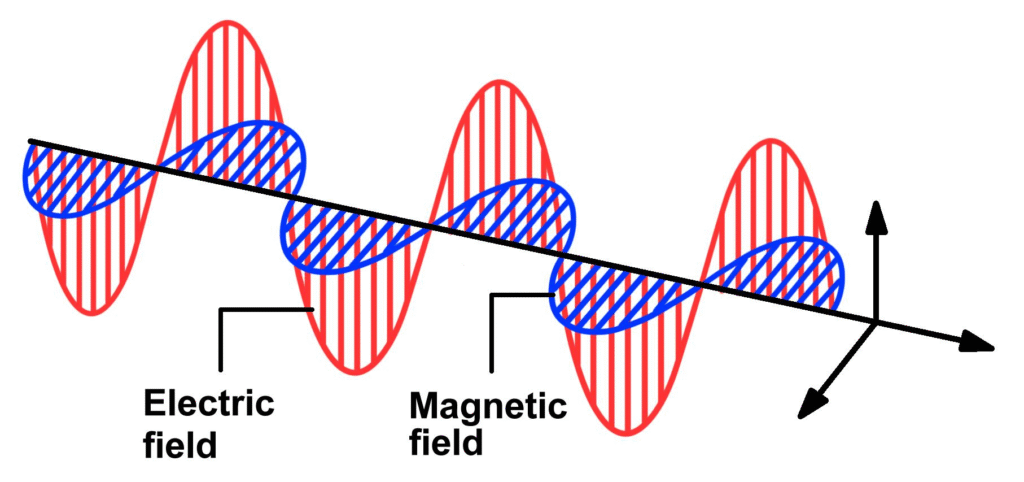
Light is an electromagnetic wave, meaning it always has two components: an electric field and a magnetic field. The electric field was believed to dominate almost all interactions with atoms, molecules, and materials. The magnetic field, on the other hand, was considered a million times weaker—so weak that most scientists simply ignored it. The only reason we believed this for so long is because our instruments were never sensitive enough to detect the magnetic influence. Now they are.
In the new experiments, scientists used ultra-stable lasers and highly controlled environments to isolate a very subtle effect. To their surprise, matter responded directly to the magnetic part of the light wave—not the electric part. Even more shocking, the magnetic response was much stronger than classical equations predicted. This overturns the long-held belief that light’s magnetic field is practically irrelevant. In the study, the researchers observed something similar to a magnetic Faraday effect, but here’s the twist: there was no external magnet. The light itself created the magnetic influence. Electrons inside the material behaved as if a magnetic field were applied, even though the only source was the magnetic oscillation of the photon.
So what does this mean for science? Quite a lot. First, it suggests that atoms interact with light in a more complex way than we thought. Second, it opens possibilities for creating new optical materials that respond to light magnetically instead of electrically. This could lead to ultra-fast optical switches, new kinds of quantum sensors, and more efficient ways of controlling photons in advanced technologies. For quantum computing, for example, this discovery may allow more stable and precise manipulation of qubits, since both the electric and magnetic parts of light can be used. Even biological and medical imaging could benefit from this, enabling new magnetic-optical methods that give clearer or safer pictures inside the body.
This finding also adds to a pattern we’ve seen in modern physics: the closer we look, the more surprising nature becomes. Over the past decade, we’ve discovered twisted forms of light, unusual quantum magnetic waves, and new behaviors of photons in exotic materials. Now we’re learning that the magnetic side of light—long ignored, barely mentioned—might play a real and active role in how light interacts with the world.
In simple terms: light is more powerful and more complex than we believed. The magnetic field isn’t a quiet passenger. Under the right conditions, it can change the behavior of matter and reshape the technologies we build. This discovery pushes science forward and reminds us that even something as familiar as light still holds secrets.
“Every discovery reminds us: the laws of nature are still being written.”