Every article we’ve published
Browse the full nnneuro library. Filter by category, or search for a topic.
The Doorway Effect: Why You Forget Why You Walked In
You walk into a room and forget why. The doorway effect shows the brain uses doorways as “chapter breaks” that can flush a just-formed plan.
Why Your Recorded Voice Sounds So Wrong
Your recorded voice sounds thin and strange because you normally hear yourself through your skull too. The science of why you cringe at your own voice.

The Invisible Gorilla: Why You Miss What’s Right in Front of You
Ask people to count basketball passes and about half miss a gorilla strolling through the scene. The invisible gorilla reveals how attention blinds us.
Patient S.M.: The Woman Who Feels No Fear
Patient S.M. lost her amygdala to a rare disease and stopped feeling fear — of snakes, horror films, even real danger. Her brain reveals where fear lives.

Why Yawning Is Contagious: The Surprising Brain Science
See someone yawn and you yawn too. Contagious yawning is linked to empathy and mirror neurons, and it is strongest with people we love. Here is the science.

Earworms: Why Songs Get Stuck in Your Head (and How to Stop Them)
An earworm is a song stuck on repeat in your mind. Around 90% of people get them weekly. Here is why songs get stuck and the science-backed tricks to stop them.

Libet’s Free Will Experiment: Does Your Brain Decide Before You Do?
Benjamin Libet found brain activity begins about 350 ms before we feel we have decided to move. Does it disprove free will? Here is the famous experiment explained.

The McGurk Effect: How Your Eyes Change What You Hear
In the McGurk effect, watching a mouth say one sound while hearing another makes you hear a third. It proves your brain blends sight and sound automatically.

Face Blindness (Prosopagnosia): When You Can’t Recognise Your Own Family
Prosopagnosia, or face blindness, makes it impossible to recognise faces, even a spouse or your own reflection. It is caused by one specialised brain region.

Misophonia: Why Chewing Sounds Fill You With Rage
For people with misophonia, chewing or tapping sounds trigger real fight-or-flight rage. Brain scans prove it is wiring, not oversensitivity. Here is the science.

Kim Peek: The Real ‘Rain Man’ Who Memorised 12,000 Books
Kim Peek, the real Rain Man, was born without a corpus callosum yet memorised around 12,000 books. His brain shows how genius and disability can coexist.

Clive Wearing: The Man Whose Memory Lasts Only Seconds
A common virus destroyed Clive Wearing's ability to form new memories, leaving him living in a 7-second window. His case reveals how memory really works.

Why Time Feels Like It Speeds Up as You Get Older
Summers once felt endless; now years vanish. Here’s why your brain compresses time as you age — and how to slow it back down.

Déjà Vu: Why Your Brain Insists You’ve Been Here Before
That eerie “I’ve been here before” feeling has a surprising explanation — and it may mean your memory is working well, not glitching.

The Rubber Hand Illusion: How Your Brain Can Be Fooled Into Owning a Fake Hand
With a paintbrush and a rubber hand, scientists can convince your brain a fake hand is yours in about a minute. Here’s why that matters.

The Marshmallow Test: Can a Four-Year-Old’s Willpower Predict Their Future?
The famous marshmallow test seemed to prove childhood willpower predicts success. A bigger study revealed a subtler, smarter truth.

Synesthesia: When People Taste Words and See Music in Colour
For some people the number 7 is green and Monday tastes of toast. Inside synesthesia, the brain’s beautiful cross-wiring of the senses.
Aphantasia: What If You Couldn’t Picture Anything in Your Mind?
Some people have no “mind’s eye” at all — they can’t voluntarily picture a face or a place. Here’s what aphantasia is really like.
H.M.: The Man Who Couldn’t Make New Memories
One 1953 operation cured his seizures and trapped him in an eternal present — revealing that memory isn't one thing, but several.
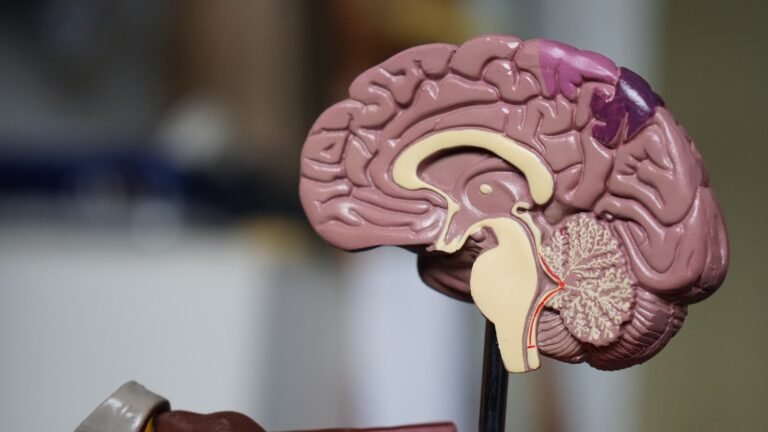
Phineas Gage: The Man Who Took an Iron Rod Through His Brain
In 1848 a railway foreman survived a metre-long iron rod through his skull — and quietly changed how we understand the brain.

Why Great Music Gives You Goosebumps: The Science of Frisson
That shiver down your spine at the perfect moment in a song has a name — frisson — and a surprisingly precise neuroscience behind it.